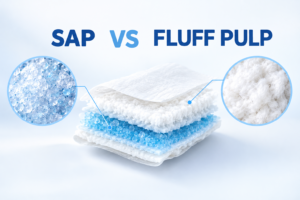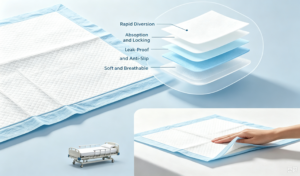

A breathable backsheet helps keep liquids inside an absorbent hygiene product while allowing moisture vapor to escape. It is commonly used in adult diapers, incontinence pads, and underpads.
For hygiene product brands, distributors, and healthcare suppliers, understanding this material can help when choosing products that balance comfort, leakage protection, and performance.
What Is a Breathable Backsheet?
A backsheet is the outer layer of an absorbent hygiene product. Its main job is to help prevent liquid from leaking onto clothing, bedding, or other surfaces.
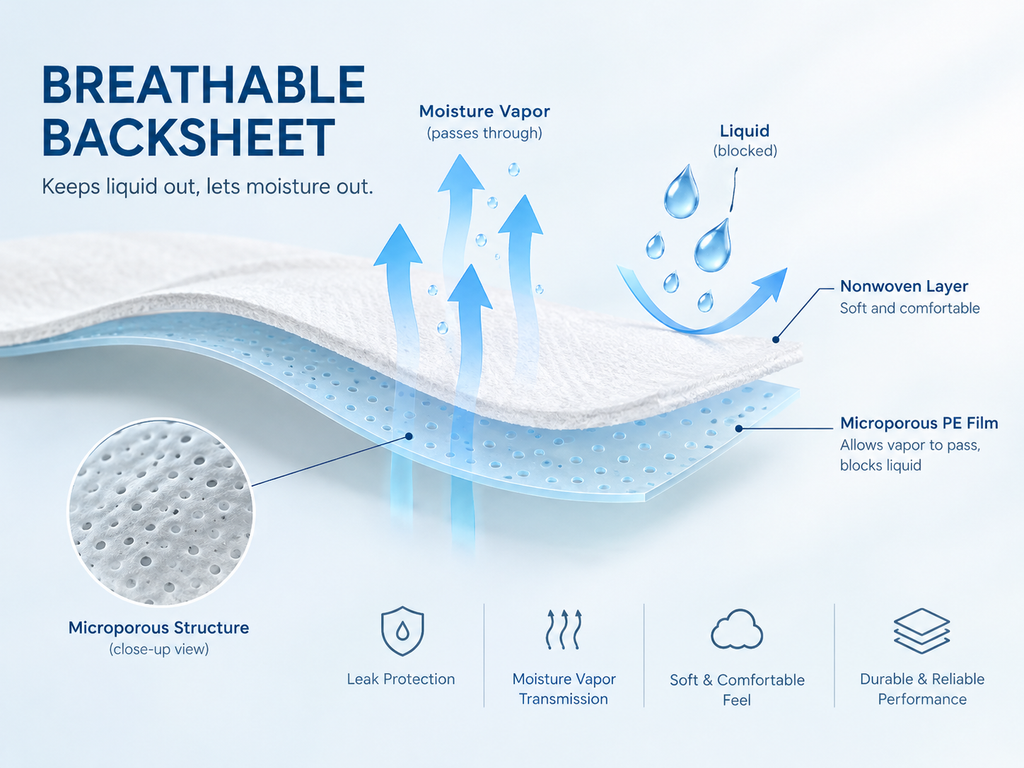
A breathable backsheet does more than provide a liquid barrier. It also allows moisture vapor to pass through, helping manage moisture inside the product.
Many breathable backsheets use microporous polyethylene (PE) film. Some products combine this film with a soft nonwoven layer for a more fabric-like feel.
Together, these materials help balance breathability, softness, and leakage protection.
How Does a Breathable Backsheet Work?
The key lies in the material’s structure.
Many breathable PE films contain microscopic pores that allow water vapor to pass through while resisting liquid penetration.
This helps moisture vapor escape without allowing liquid to pass through easily.
However, breathability does not mean that a material allows all air and liquids to pass freely. Its performance depends on the film structure, material specifications, and finished-product design.
What Are the Benefits of a Breathable Backsheet?
1. Helps Manage Moisture
Moisture can build up during product use. A breathable backsheet allows some water vapor to escape, helping manage humidity within the product.
This can support a more comfortable experience, especially during extended wear.
2. Supports Comfort
The outer layer affects how a hygiene product feels during use.
A breathable film combined with a soft nonwoven layer can provide a softer, more fabric-like finish. This can be beneficial for adult diapers and other products designed for extended use.
3. Helps Prevent Leakage
Breathability is only useful when the material also provides adequate liquid protection.
A properly designed backsheet helps prevent urine from leaking onto clothing, bedding, or mattresses. The actual level of protection depends on the material and product construction.
4. Offers Flexible Design Options
Breathable backsheets are available in different material structures, thicknesses, and surface finishes.
These options allow manufacturers to develop products for different applications, comfort requirements, and price points.
Breathable Backsheet vs. Non-Breathable Backsheet
The main difference is how easily moisture vapor passes through the material.
A non-breathable backsheet primarily acts as a liquid barrier and generally allows less moisture vapor to escape.
A breathable backsheet is designed to provide liquid protection while allowing moisture vapor to pass through.
Neither option is automatically the best choice for every product. Manufacturers should consider the intended use, comfort requirements, leakage protection, and target cost before selecting a material.
Where Are Breathable Backsheets Used?
Breathable backsheets are used in various absorbent hygiene products.
Adult Diapers
Adult diapers need reliable leakage protection and comfort during extended wear. A breathable backsheet can help manage moisture vapor while protecting outer clothing.
Incontinence Pads
Incontinence pads absorb urine and help manage bladder leakage. The backsheet helps prevent liquid from reaching underwear or clothing, while a breathable design can support moisture management.
Underpads
Underpads protect beds, mattresses, chairs, and other surfaces from urine and other liquids. A suitable backsheet helps provide surface protection while allowing moisture vapor to escape.
For hospitals, nursing homes, and home-care settings, the right material depends on the product’s intended use and performance requirements.
How to Choose the Right Breathable Backsheet
When sourcing absorbent hygiene products, don’t rely on the word “breathable” alone. Consider these four factors:
- Moisture-vapor transmission: Check whether the material meets the needs of the intended application.
- Liquid resistance: Ensure it provides adequate protection against leakage.
- Softness and flexibility: Consider the desired feel and comfort of the finished product.
- Overall product performance: Evaluate how the backsheet works with the absorbent core and other layers.
Testing the finished product is important because material properties alone cannot fully determine leakage protection, comfort, or overall performance.
Looking for the Right Hygiene Product Solution?
Choosing a suitable backsheet is an important part of developing a reliable absorbent hygiene product. The backsheet must work together with the topsheet and absorbent core to meet the product’s performance requirements.
At Jayfen Health, we support B2B customers sourcing underpads, incontinence pads, and adult diapers for different market needs.
Whether you are developing a private-label product or sourcing products for distribution, we can discuss your product specifications and OEM customization requirements.
Contact Jayfen Health to explore the right solution for your market.