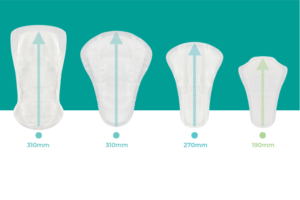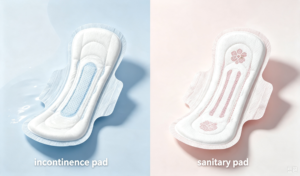

If you’re sourcing disposable hygiene products — underpads, incontinence pads, or sanitary pads — you’ve almost certainly seen the term “SAP” in product specifications. But what exactly is it, and why should it matter to your purchasing decision?
SAP is short for **Super Absorbent Polymer**, the material that gives modern hygiene products their ability to absorb and lock away large amounts of liquid. Whether you’re an importer, a distributor, or a brand owner evaluating an underpad manufacturer, understanding SAP is one of the fastest ways to make smarter sourcing decisions.
What Is SAP?
SAP (Super Absorbent Polymer)** is a type of polymer — most commonly **sodium polyacrylate** — that can absorb and retain many times its own weight in liquid. When liquid touches SAP, the polymer absorbs it and transforms into a gel, trapping the fluid inside so it cannot leak back out.
This single property is what separates today’s thin, high-performance hygiene products from the bulky, all-pulp products of the past. In disposable underpads, incontinence pads, sanitary pads, and diapers, SAP is the ingredient that keeps the surface dry and prevents leakage.
How Does SAP Work?
SAP works in three simple stages:
1. **Absorption** — SAP particles draw liquid in quickly through osmosis and capillary action.
2. **Gel formation** — The polymer swells into a gel, physically locking the liquid inside its molecular structure.
3. **Retention** — The gel holds the liquid even under pressure, which prevents rewet (liquid leaking back onto the skin or surface).
In most products, SAP is blended with **fluff pulp** (cellulose fiber) and sealed inside a nonwoven layer. The fluff pulp spreads the liquid quickly, while the SAP locks it away — together they deliver fast absorption plus long-lasting dryness.
Key Properties of High-Quality SAP
Not all SAP is equal. When a factory selects SAP for its products, it evaluates several properties:
| Property | Why It Matters |
| **Absorption capacity** | How much liquid the SAP can hold — determines overall product absorbency |
| **Absorption speed** | How fast it draws liquid in — affects leakage protection |
| **Retention (low rewet)** | How well it holds liquid under pressure — keeps skin dry |
| **Gel strength** | How stable the gel is — prevents gel blocking and shifting |
| **Dryness** | How dry the surface stays after absorption — drives user comfort |
These properties directly determine whether an underpad or sanitary pad feels dry, stays in place, and protects against leaks.
Where Is SAP Used?
SAP is the core absorbent in nearly all modern disposable hygiene products:
**Underpads** — Used in hospitals, elderly care, and home care to protect beds and surfaces. A high-quality underpad manufacturer selects SAP that delivers high capacity with low rewet.
**Incontinence pads** — For adults with light to heavy incontinence, SAP provides the discretion and dryness users expect.
**Sanitary pads** — SAP enables thin, comfortable pads with strong absorption and reliable protection.
**Diapers & adult briefs** — SAP is what keeps babies and adults dry for hours.
Why SAP Quality Matters for Your Brand
If you’re buying products to sell under your own brand, the SAP your factory uses has a direct impact on your reputation:
Better absorption = fewer complaints. Poor SAP leads to leakage and rewet — the top reasons customers switch brands.
Thinner products = lower shipping costs. High-quality SAP absorbs more per gram, allowing slimmer products that cost less to ship.
Dryness = repeat purchases. In hygiene products, comfort drives loyalty.
This is why serious buyers don’t just ask “does it absorb?” — they ask “what SAP does the factory use, and how is it tested?”
How Jayfen Health Uses High-Quality SAP
As a professional manufacturer of medical and personal care products, Jayfen Health treats SAP selection and testing as a core part of production quality.
– We carefully select SAP suppliers and verify every batch through our **in-house laboratory**.
– Products are manufactured under **ISO 13485 and ISO 9001** standards, and comply with **FDA and CE** requirements.
– Our underpads, incontinence pads, and sanitary pads are tested for absorption speed, capacity, and rewet to ensure consistent performance.
– With **7 production lines** and an annual capacity of **1.5 billion pieces**, we support OEM/ODM projects of any scale.
Whether you need standard products or a fully customized underpad or sanitary pad, our team can match the right SAP and absorbency level to your target market.
Frequently Asked Questions
A: Yes. SAP used in hygiene products is non-toxic and widely used in diapers, sanitary pads, and medical underpads. Finished products are tested to meet FDA and CE safety standards.
A: SAP can absorb hundreds of times its own weight in water. In finished products, the total absorbency depends on the amount of SAP, the fluff pulp ratio, and the product design.
A: Fluff pulp spreads liquid quickly but holds less; SAP locks liquid away and prevents rewet. Most products combine both for the best performance.
A: Yes. As an OEM/ODM manufacturer, we adjust the SAP-to-pulp ratio and total absorbency to match your market needs and budget.
A: Premium and premium-strength underpads, heavy-flow incontinence pads, and high-absorbency sanitary pads use higher SAP content. Our team can recommend the right configuration for your market.
Ready to Source High-Performance Hygiene Products?
If you’re looking for a reliable underpad manufacturer or a factory for incontinence pads and sanitary pads, contact Jayfen Health today.
[Request a Quote →] (contact page)
Related products: [Premium Underpads], [Standard Underpads], [Female Incontinence Pads], [Male Incontinence Pads]*